Every bride eventually asks us some version of the same question. What time should we shoot? And the honest, slightly maddening answer is: it depends entirely on which love story you want your photographs to tell.
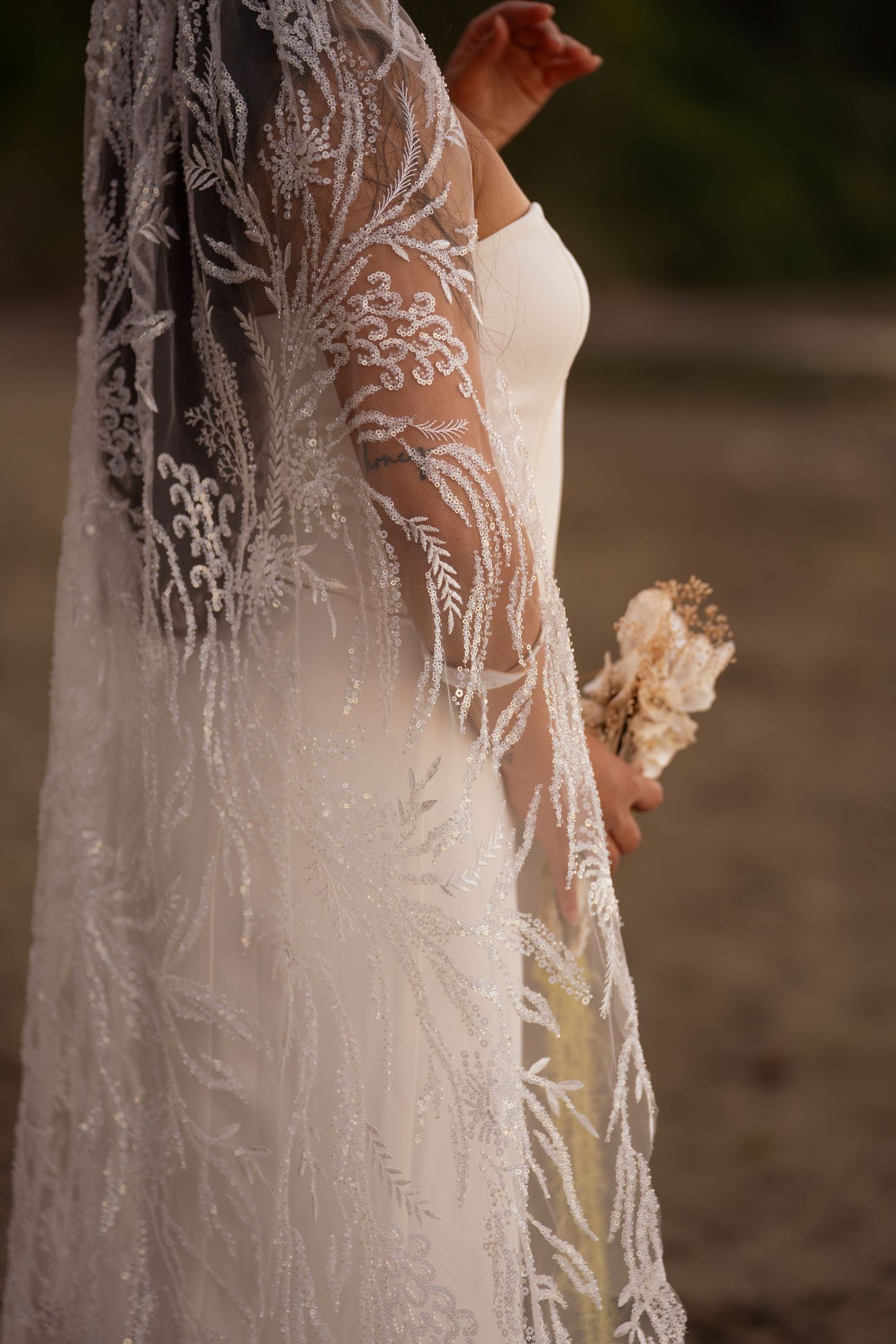
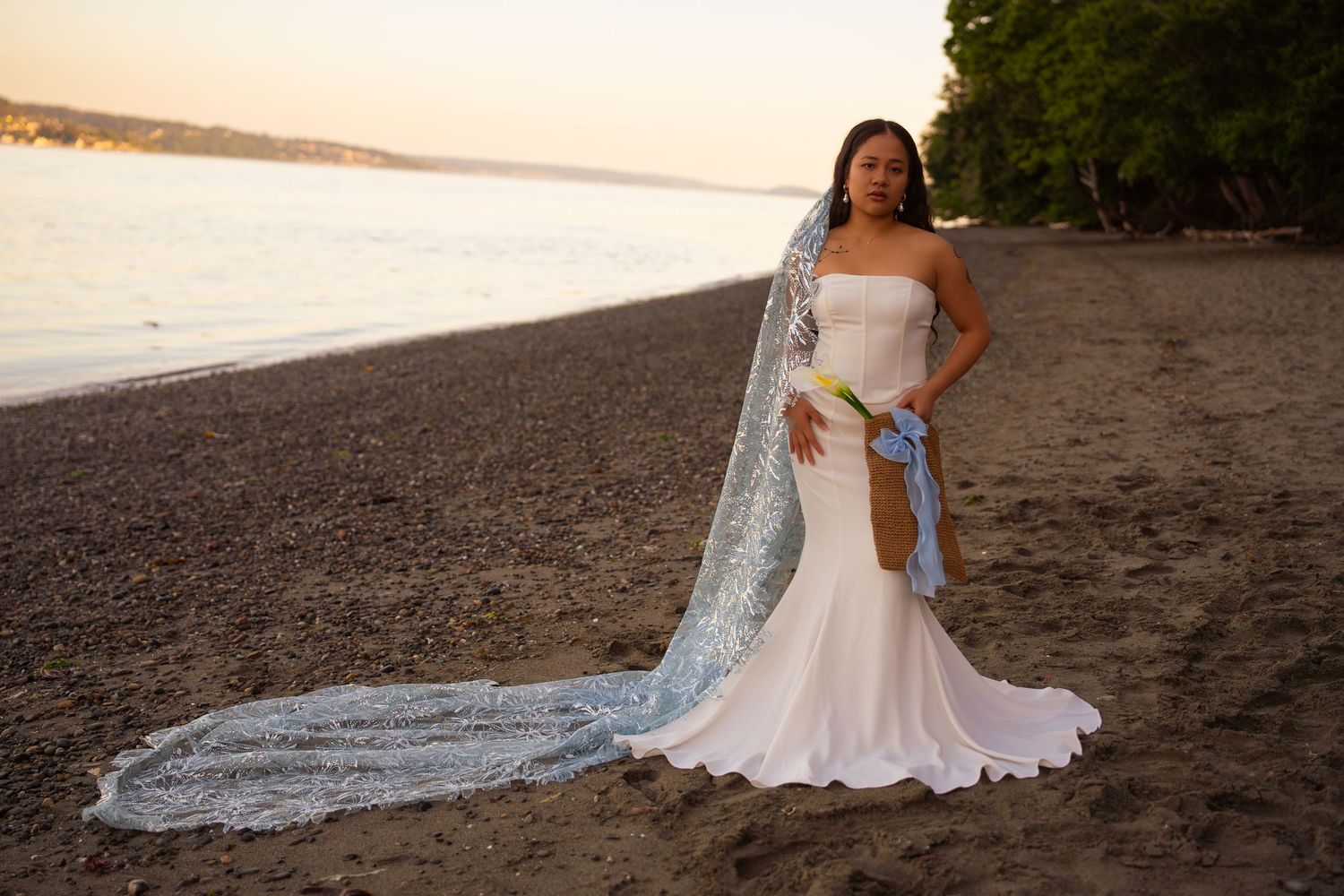
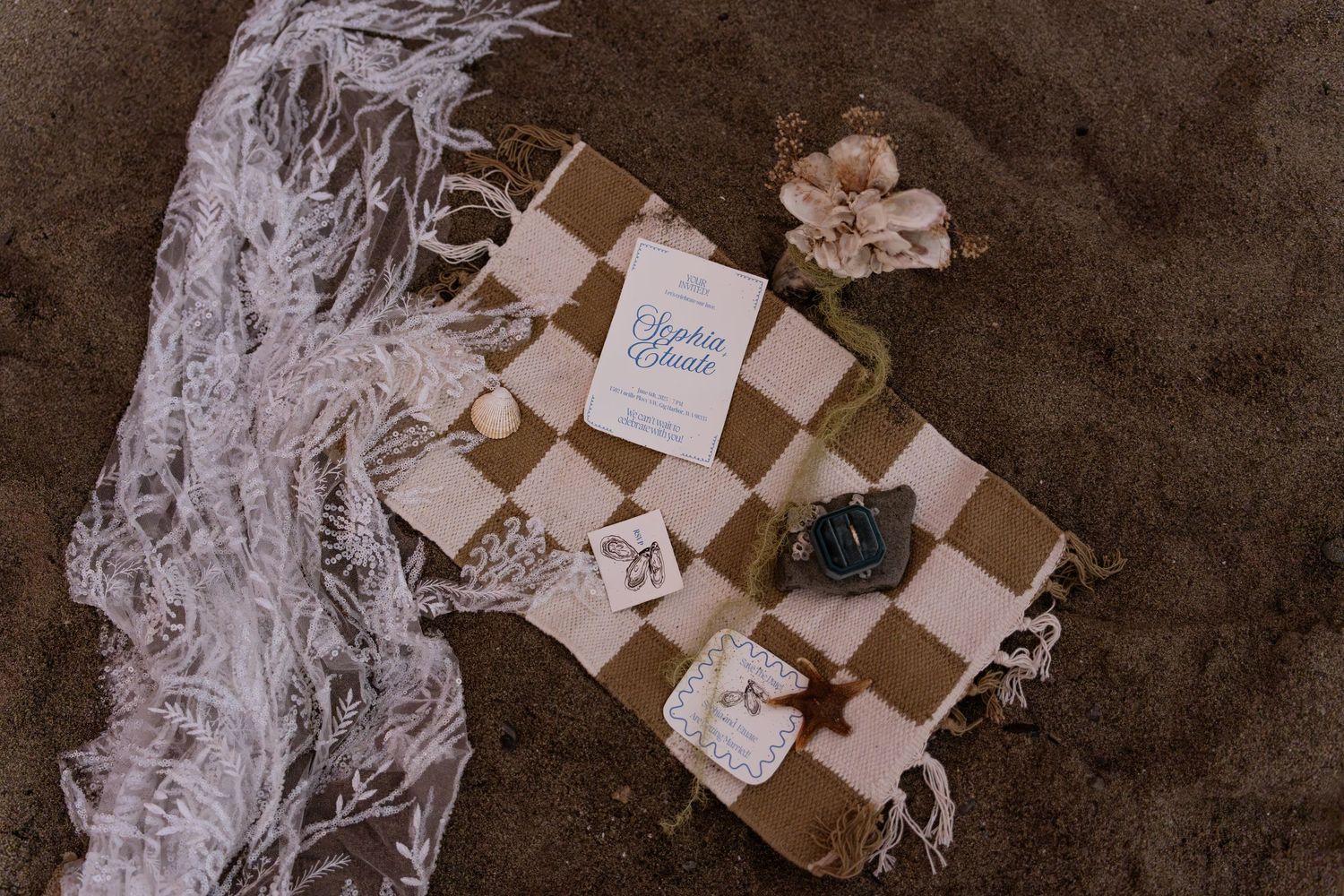
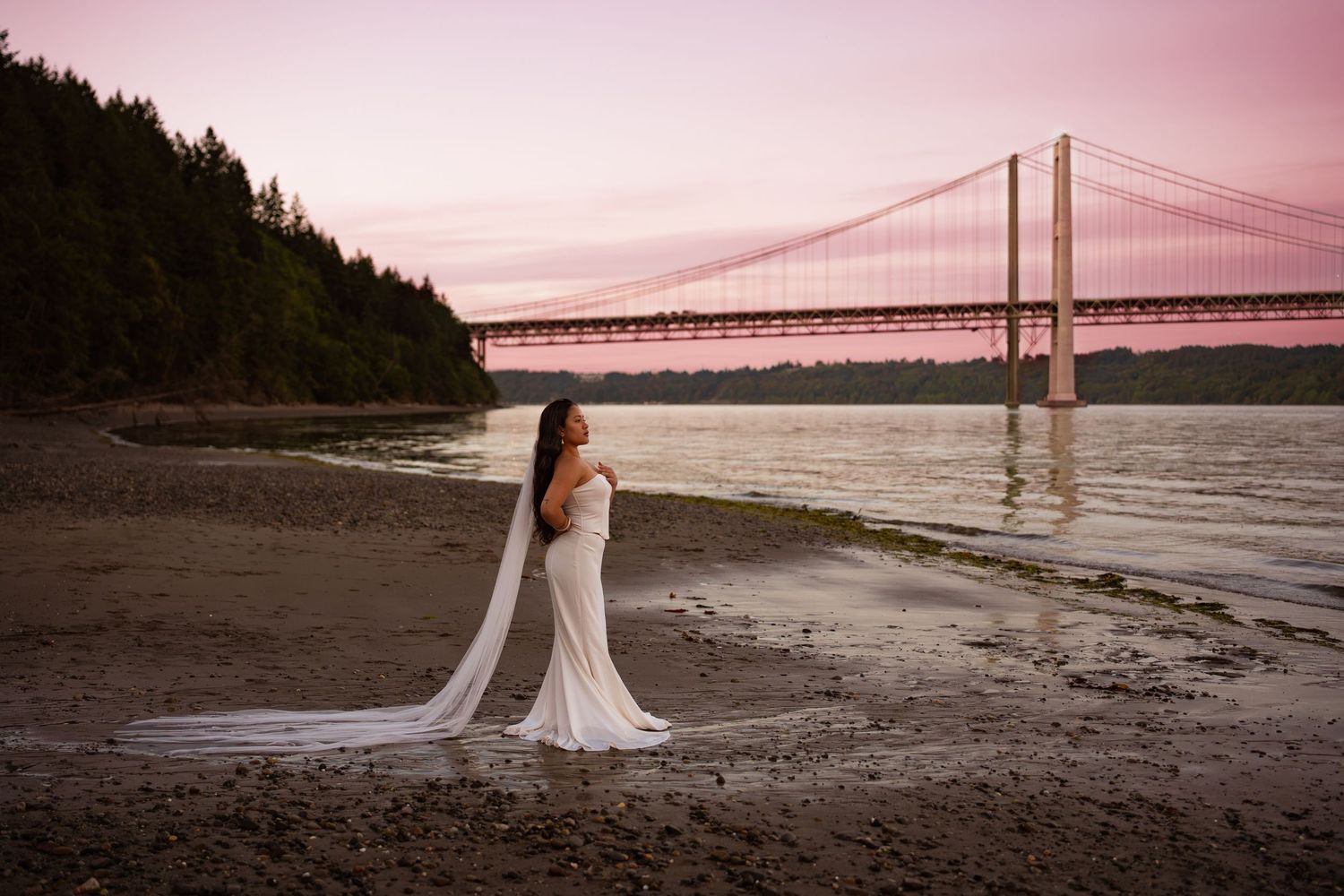
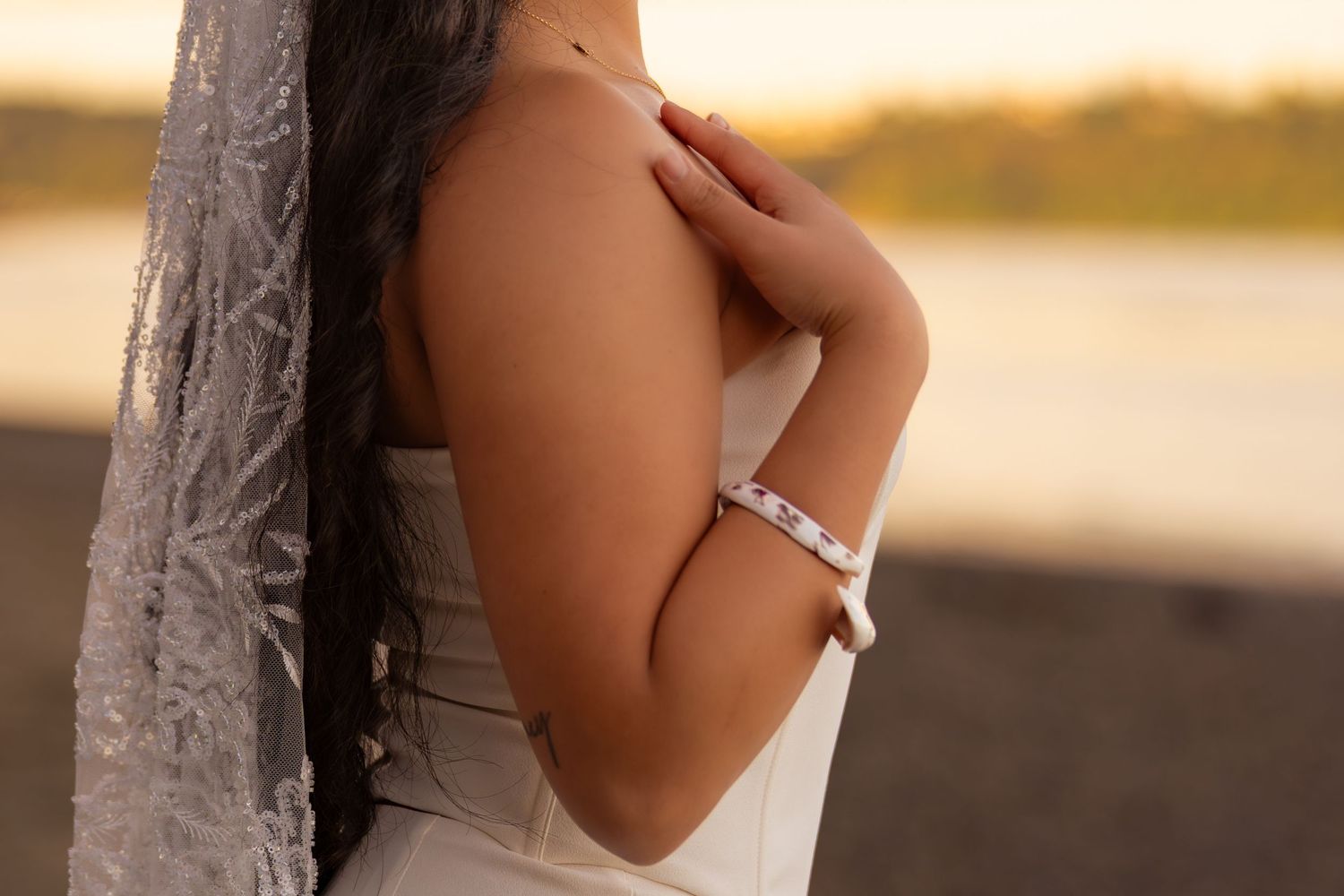
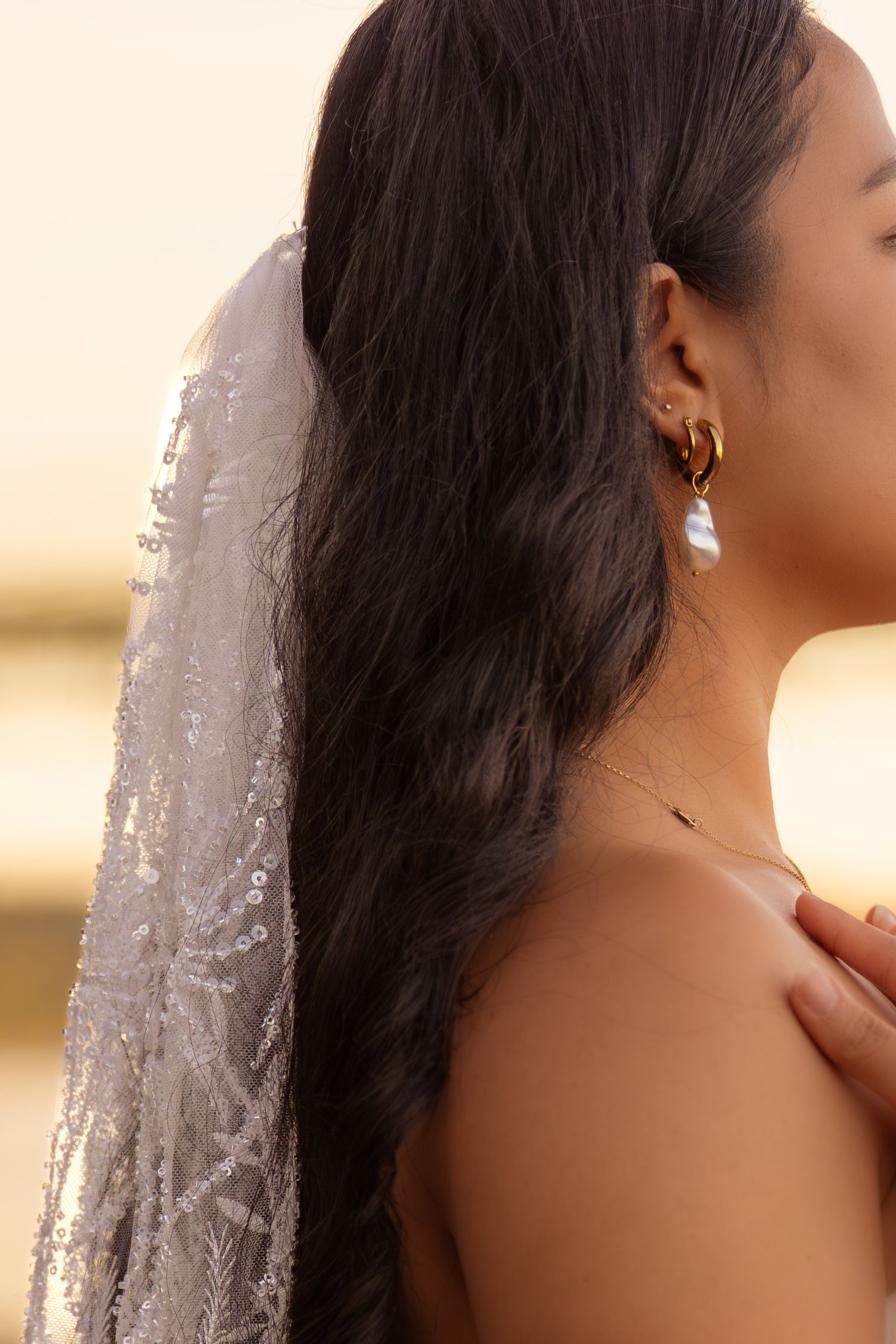
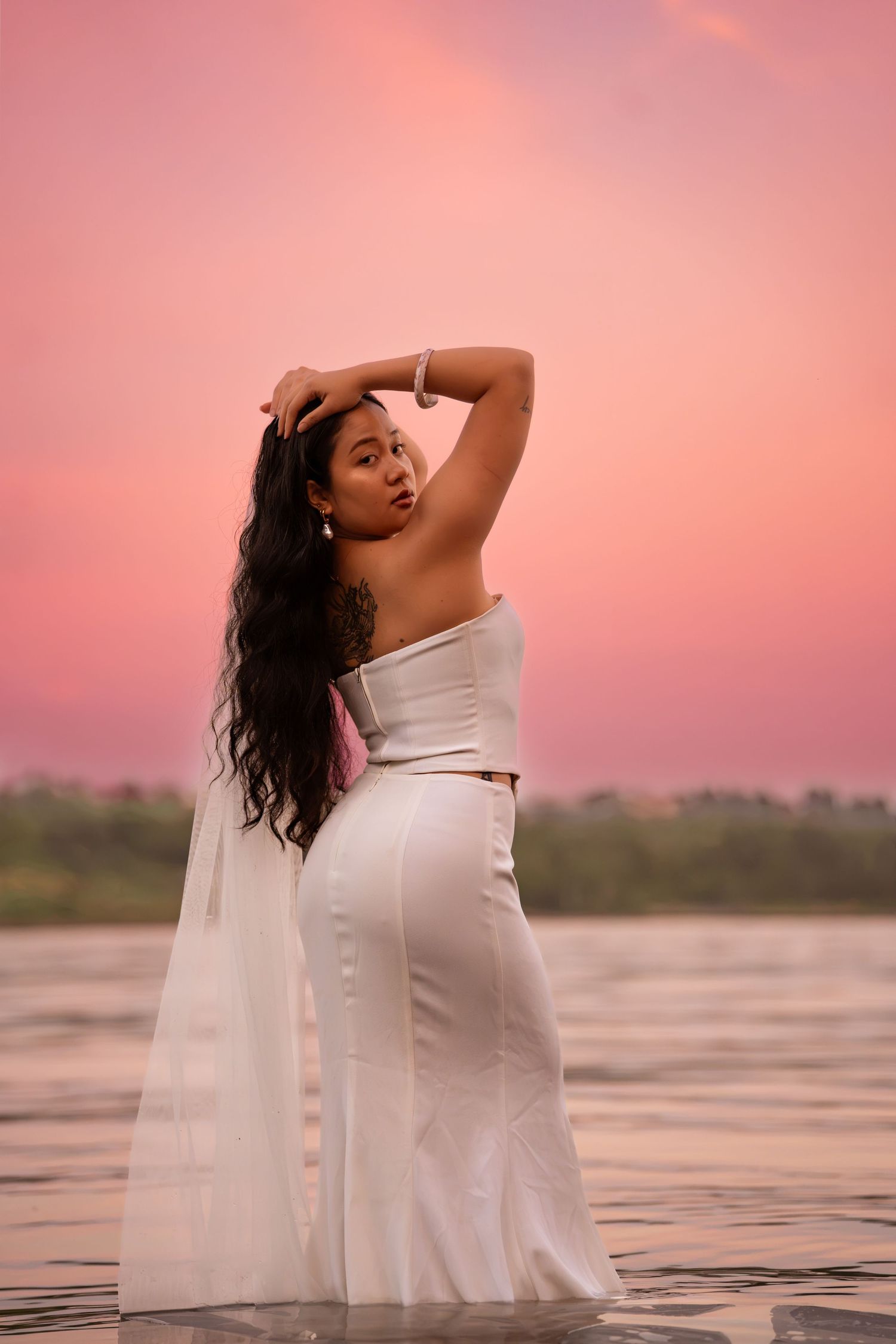
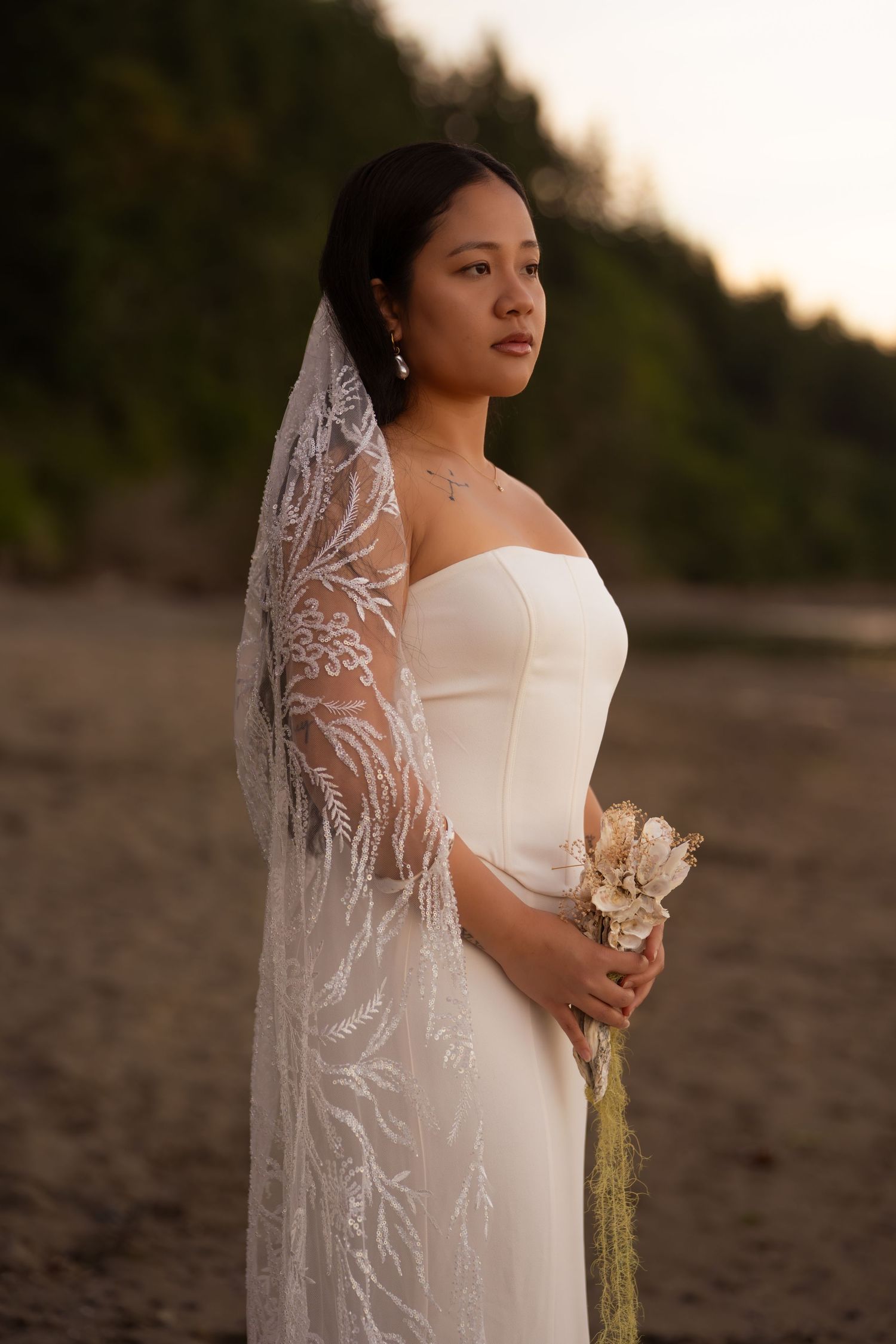
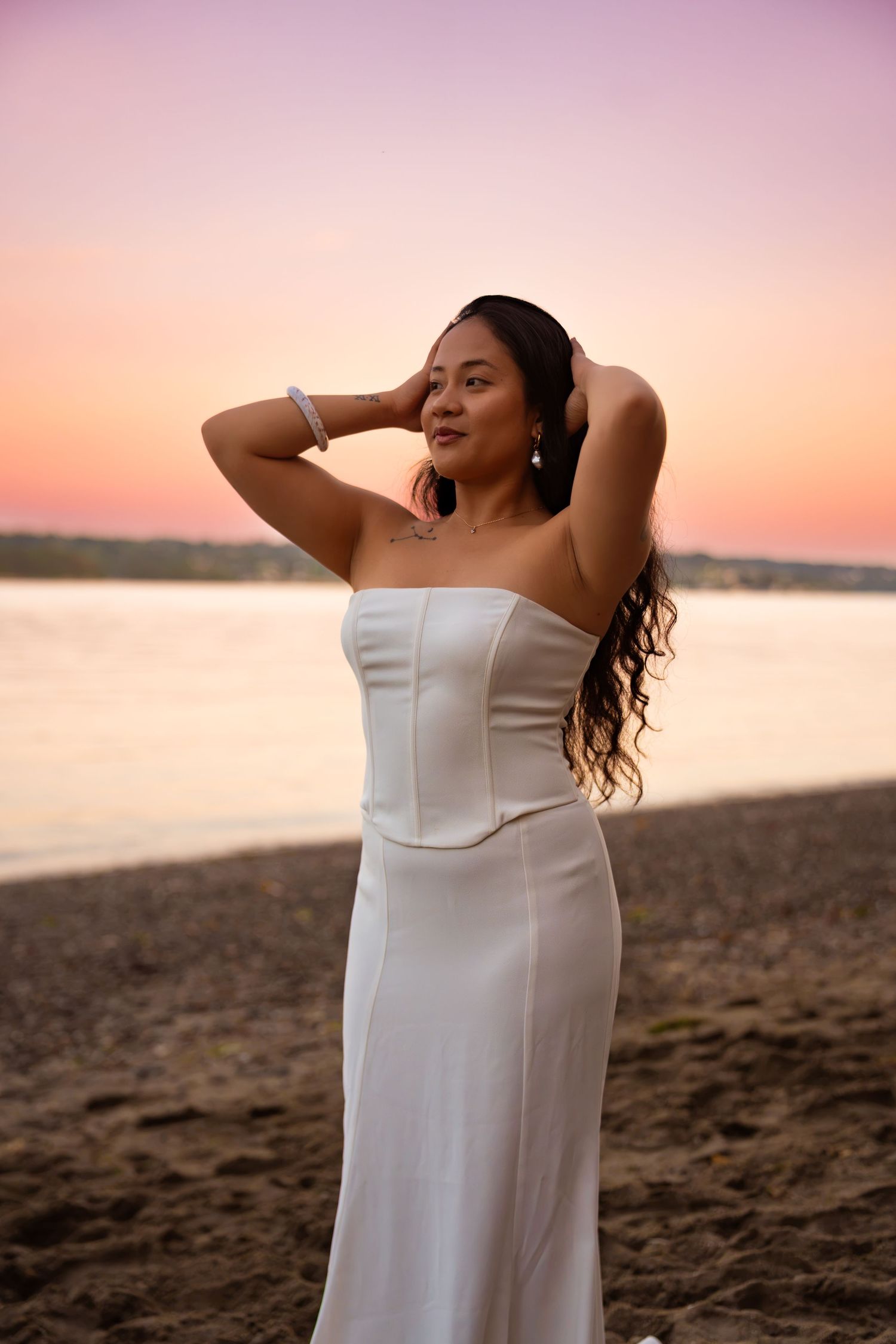
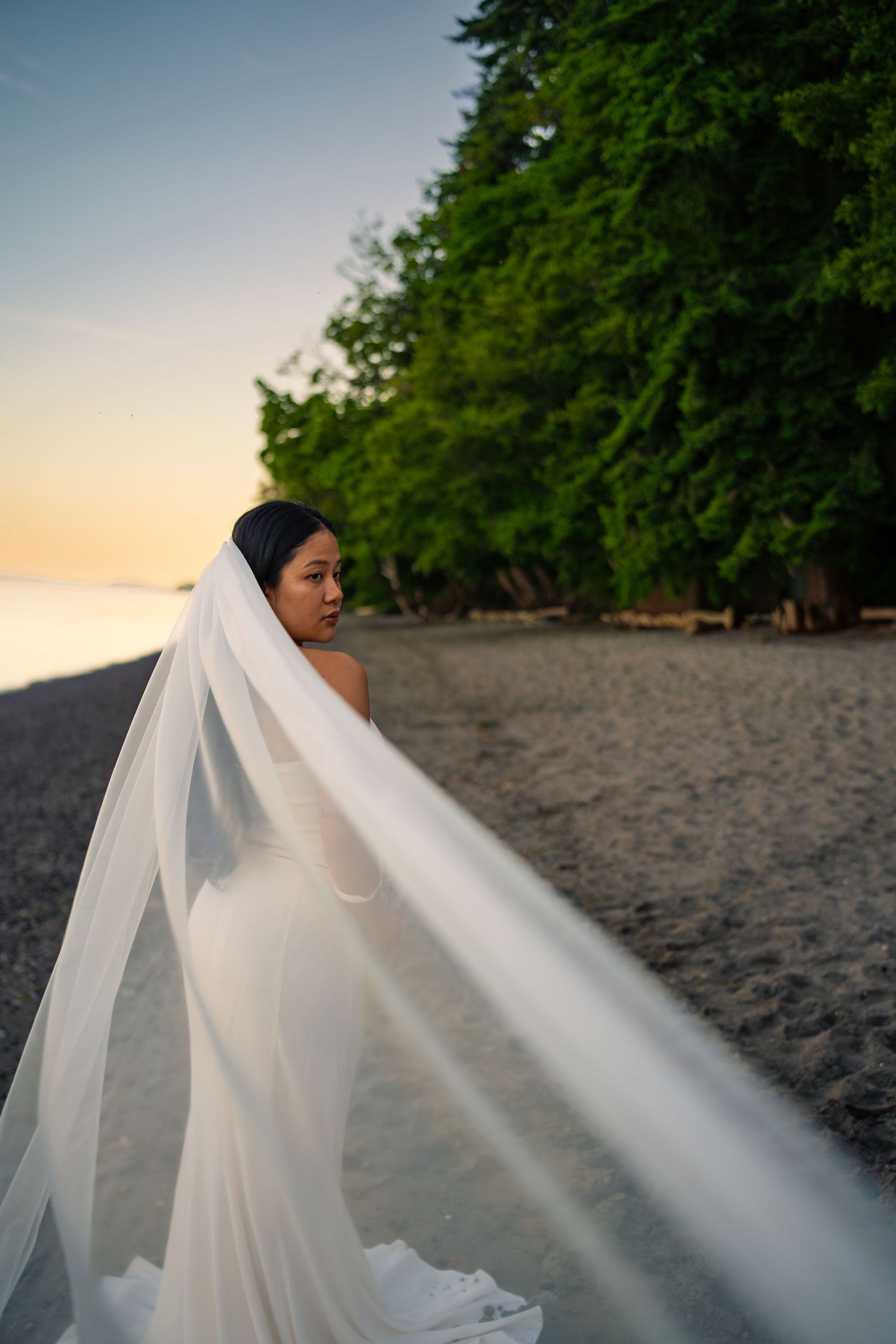
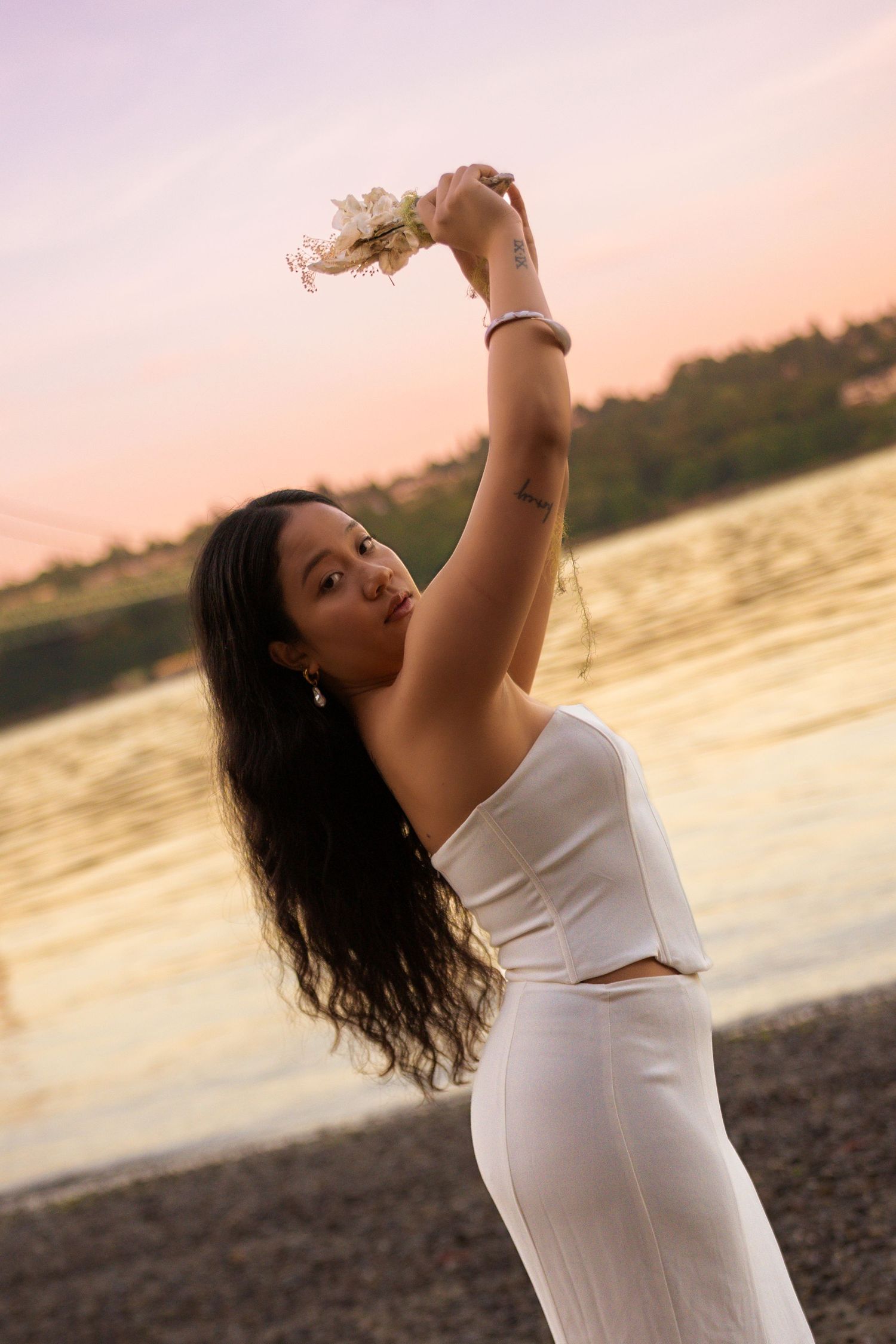
We got the rare chance to answer that question definitively when Sophia, one of our favorite brides, let us photograph her bridal portraits twice on the very same beach, once as the sun was still generous and gold, and once after it had slipped below the horizon and left the sky to do the talking. Same bride. Same shoreline. Same eclectic, romantic wardrobe, a blue lace veil, a conch shell arm cuff, a bouquet fashioned from seaweed with an oyster clutch tucked at her side, because Sophia has never met a mermaid moment she didn't want to lean into. Two entirely different love stories emerged from the same forty feet of sand, forty minutes apart.
Consider this our field notes.
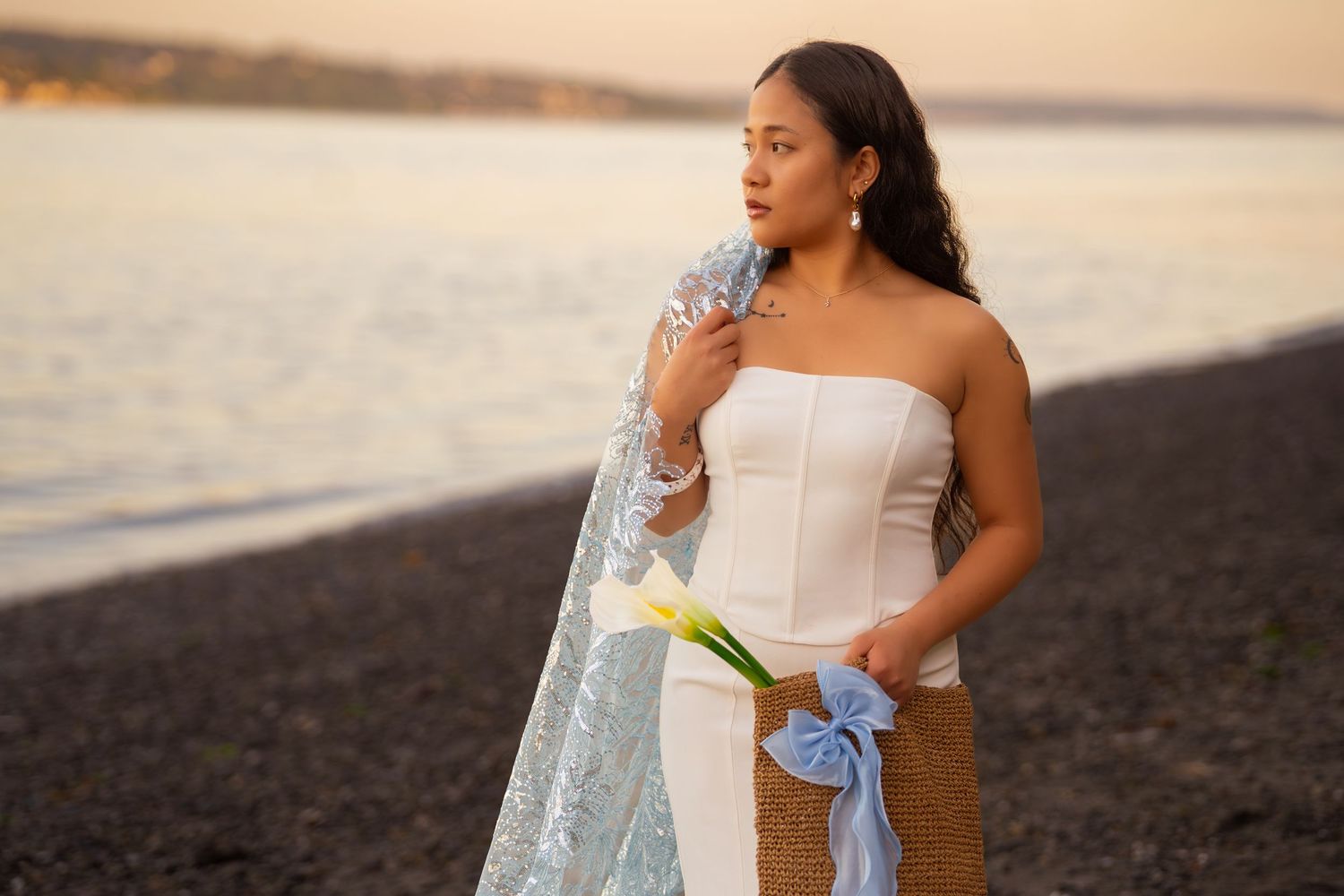
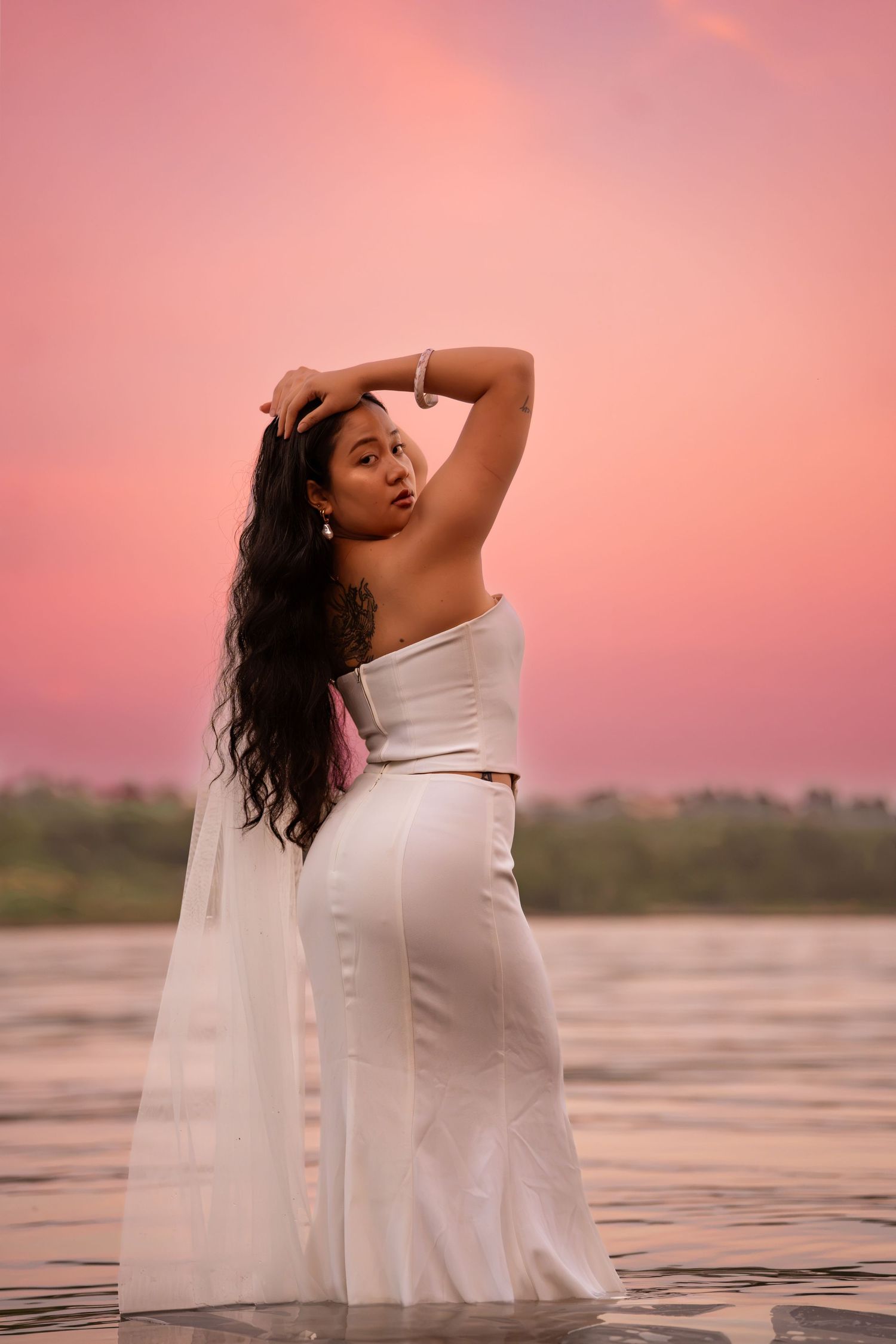
Golden hour, in a word, is drenched.
It arrives roughly an hour before sunset (or just after sunrise, if you're the adventurous type) and it does exactly what its name promises: it turns everything the color of champagne. Skin glows. Hair catches fire at the edges. The ocean behind Sophia looked like something out of a Nancy Meyers film, warm and wide open and endlessly forgiving. Golden hour is The Notebook on the dock. It is romance you can practically taste. If your wedding vision leans toward sun-kissed, joyful, technicolor storytelling, this is your hour, and it is remarkably kind to nearly every skin tone and every dress fabric we've ever worked with.
The tradeoff, if we're being honest curators of love rather than just cheerleaders for the sun, is that golden hour is brief and it is bossy. You get roughly twenty to thirty minutes of truly magic light before it either turns too harsh or disappears altogether, which means timeline precision matters enormously. It is also, by definition, a crowd-pleaser, which means if a beach or garden is popular, you may be sharing your glow with other people's golden hour plans too.
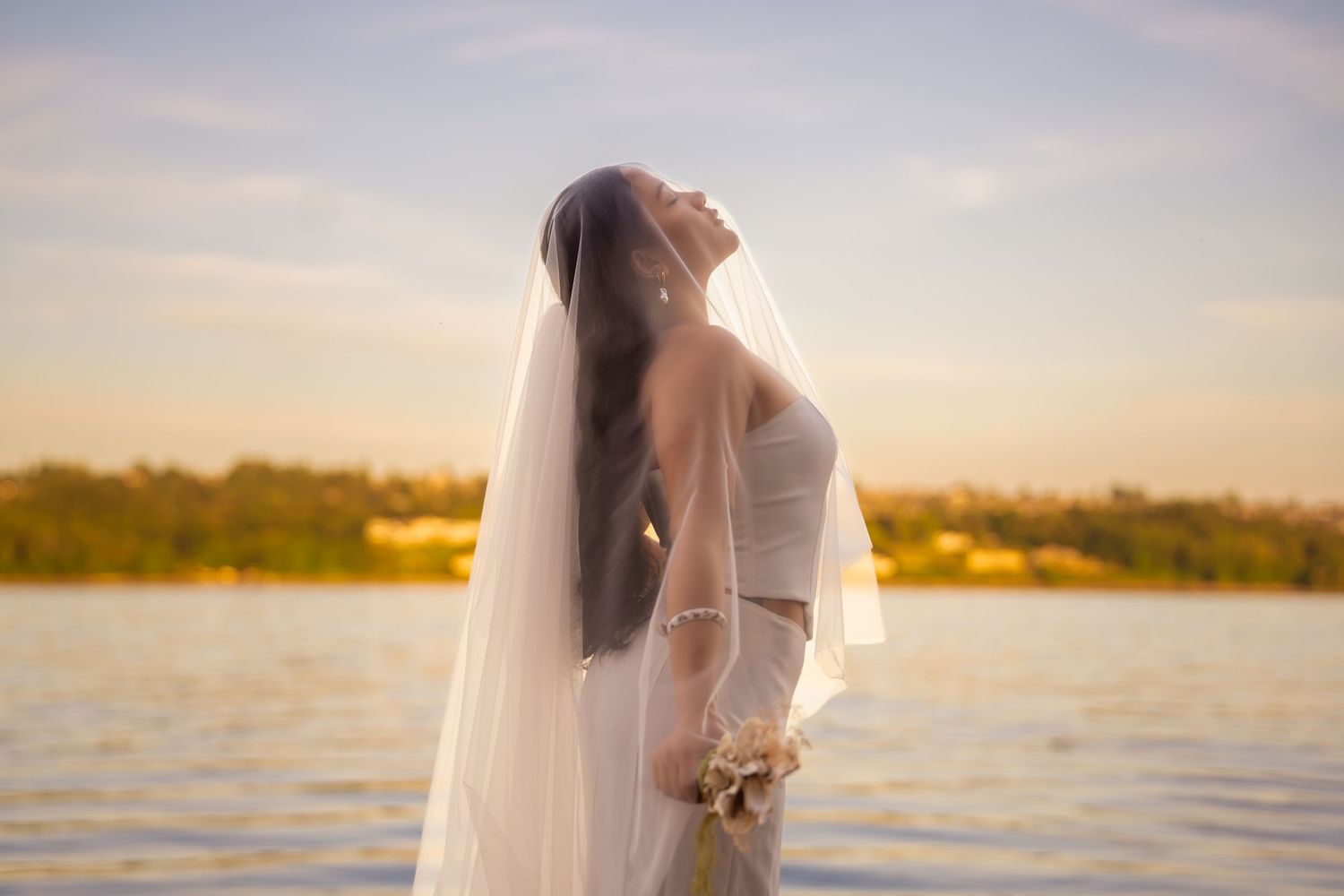
Blue hour is the plot twist nobody explains to you until they've experienced it.
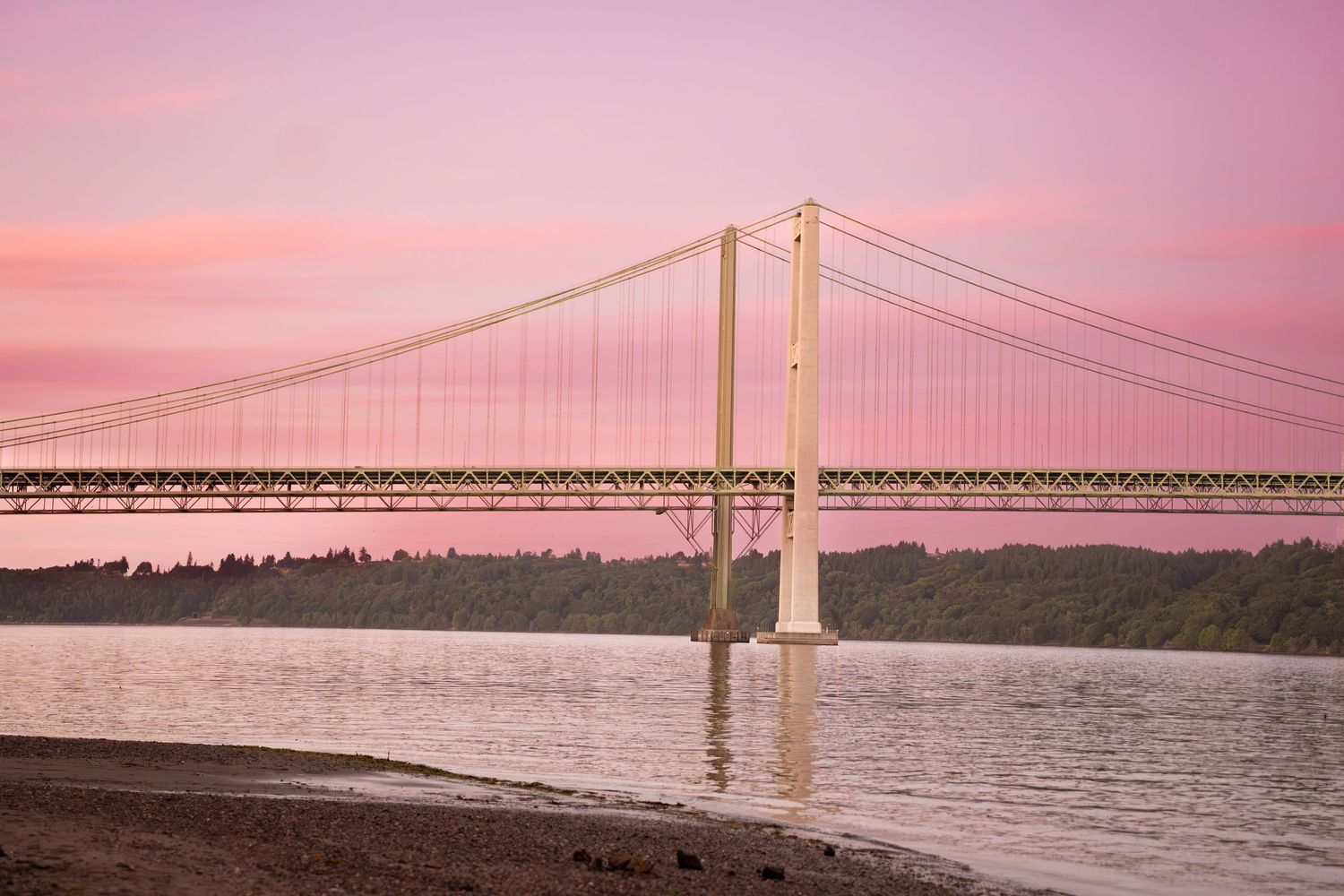
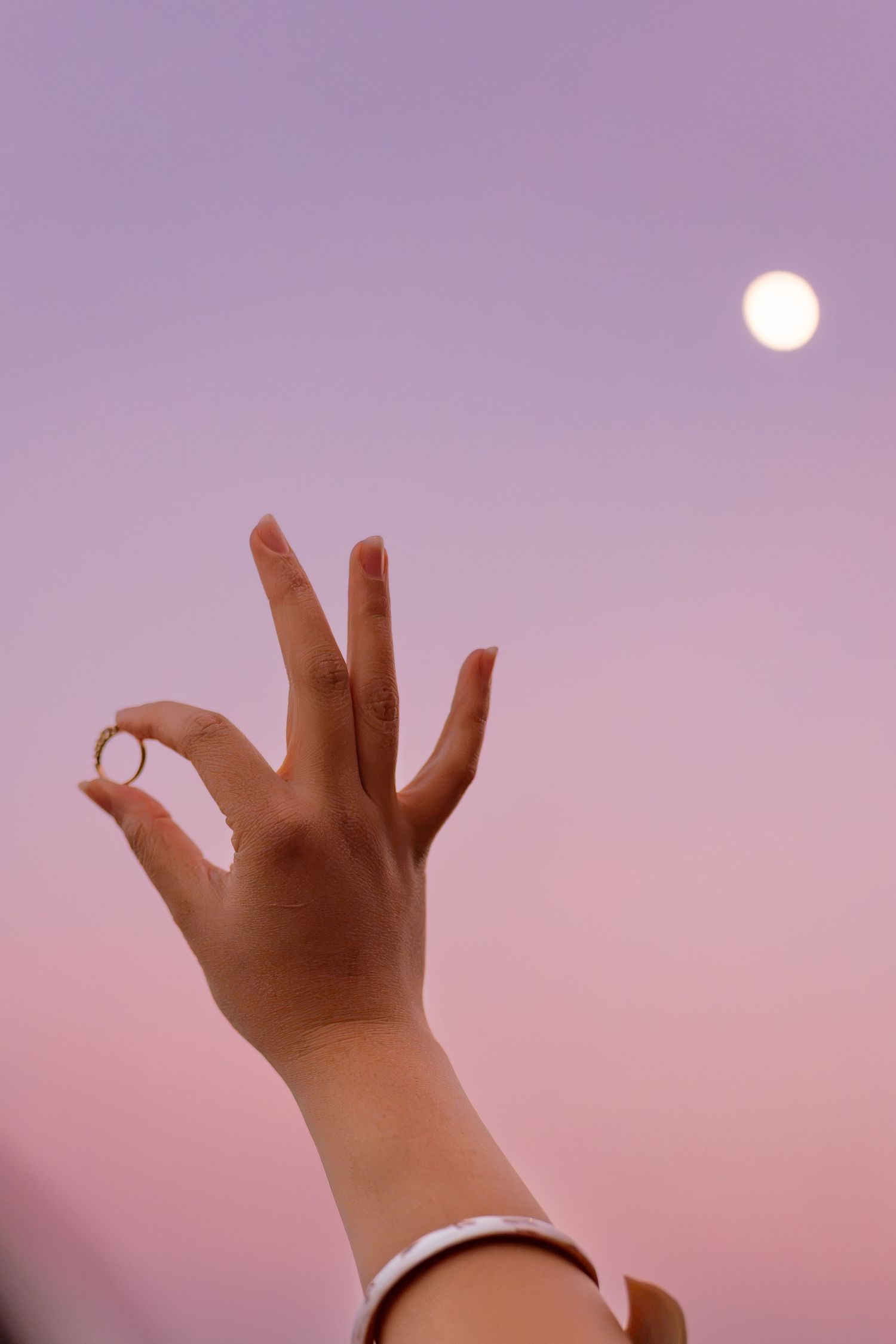
It happens in that hushed window just after the sun has fully set, when the sky hasn't yet committed to darkness and instead settles into something between periwinkle and ink. Sophia's blue hour portraits feel like a different chapter entirely, quieter, more sensual, almost secretive, like the last scene of a movie before the credits roll and you're not quite ready for it to end. The blue lace veil practically disappeared into the sky behind her, and the whole set felt less like a wedding photo and more like a Practical Magic fever dream, moody, a little witchy, deeply romantic in a way that whispers instead of announces.
Blue hour asks more of your photographer. The light is low, which means a slower, more deliberate pace, careful posing, and often some off-camera lighting or long exposure work to keep everything crisp instead of murky. It rewards patience and it photographs beautifully for couples who want their images to feel cinematic and editorial rather than bright and airy. What it will not give you is that sun-drenched golden warmth. Blue hour is a mood, and moods, by their nature, aren't for everyone.
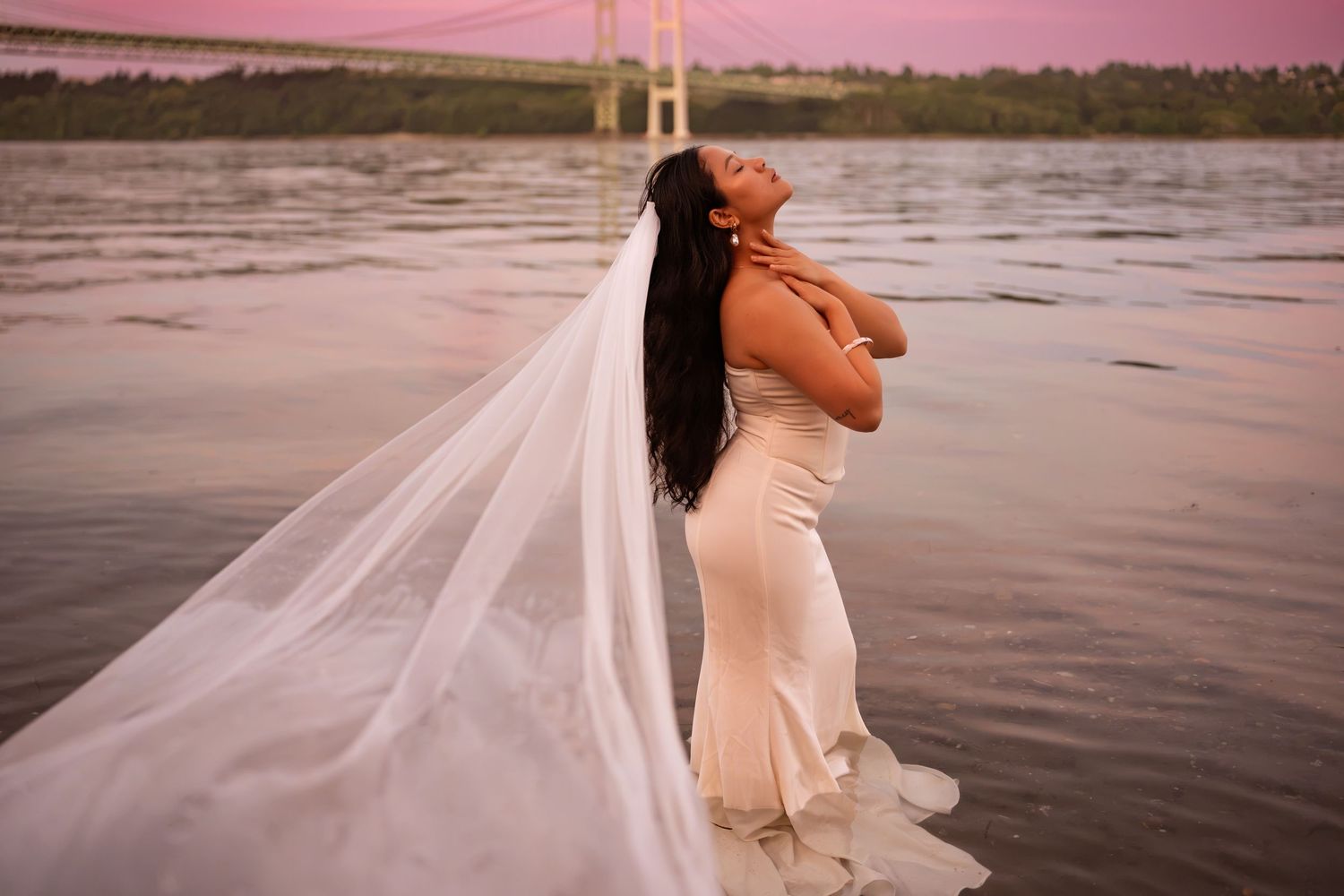
So which one wins?
Here is our very biased, very professional answer: neither, and also both. Golden hour and blue hour are not competitors. They are two perspectives on the same love story, which, if that phrase sounds familiar, is more or less the whole philosophy we built this studio around. A couple getting married on the South Carolina coast, or flying us out to a destination beach anywhere in the world, doesn't have to choose a single mood for their day. Many of our most striking galleries blend both, golden hour for the ceremony and the joyful, sun-washed portraits with the whole wedding party, and blue hour tucked in afterward for a handful of quiet, just-the-two-of-you images that feel like they belong in a gallery rather than an album.
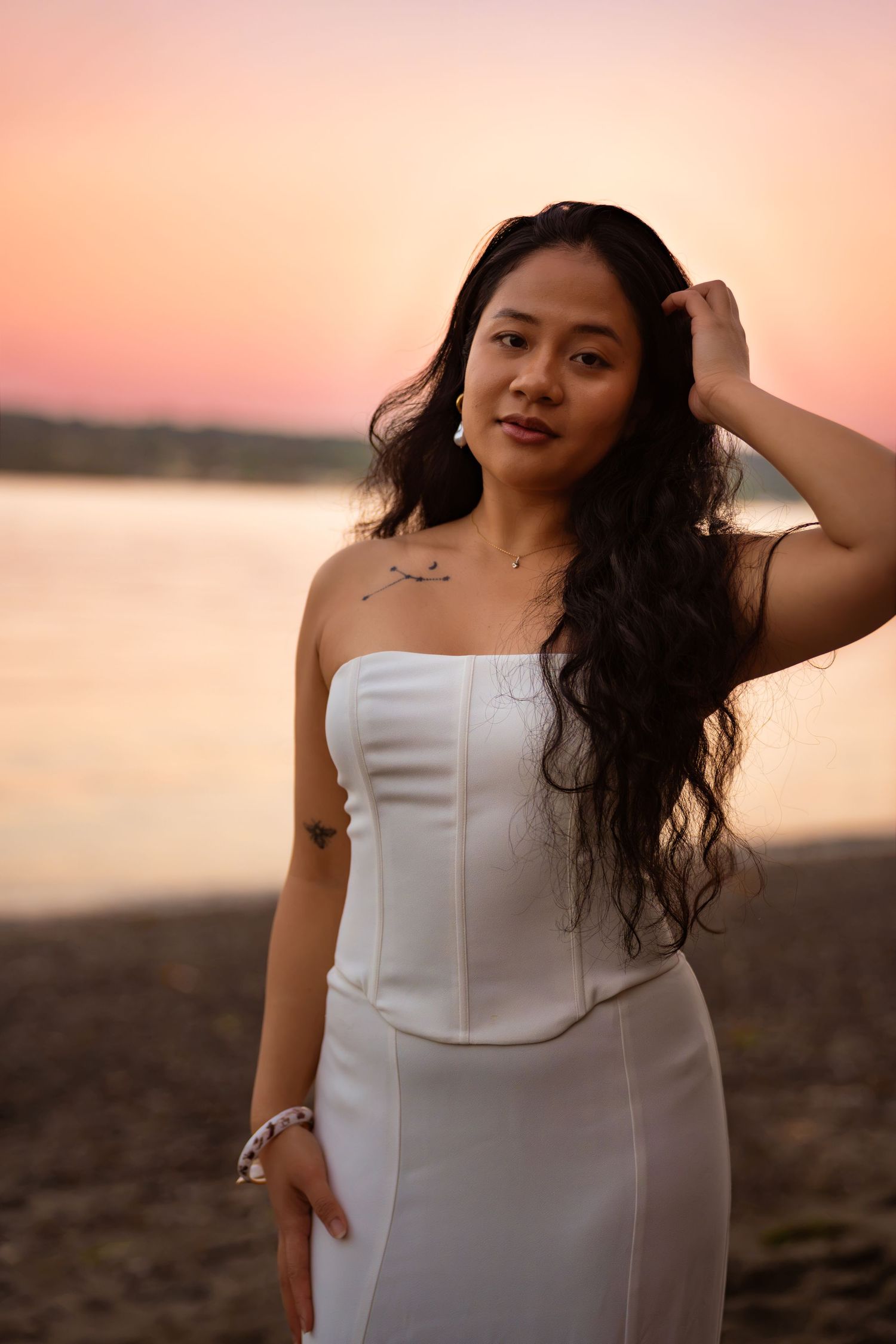
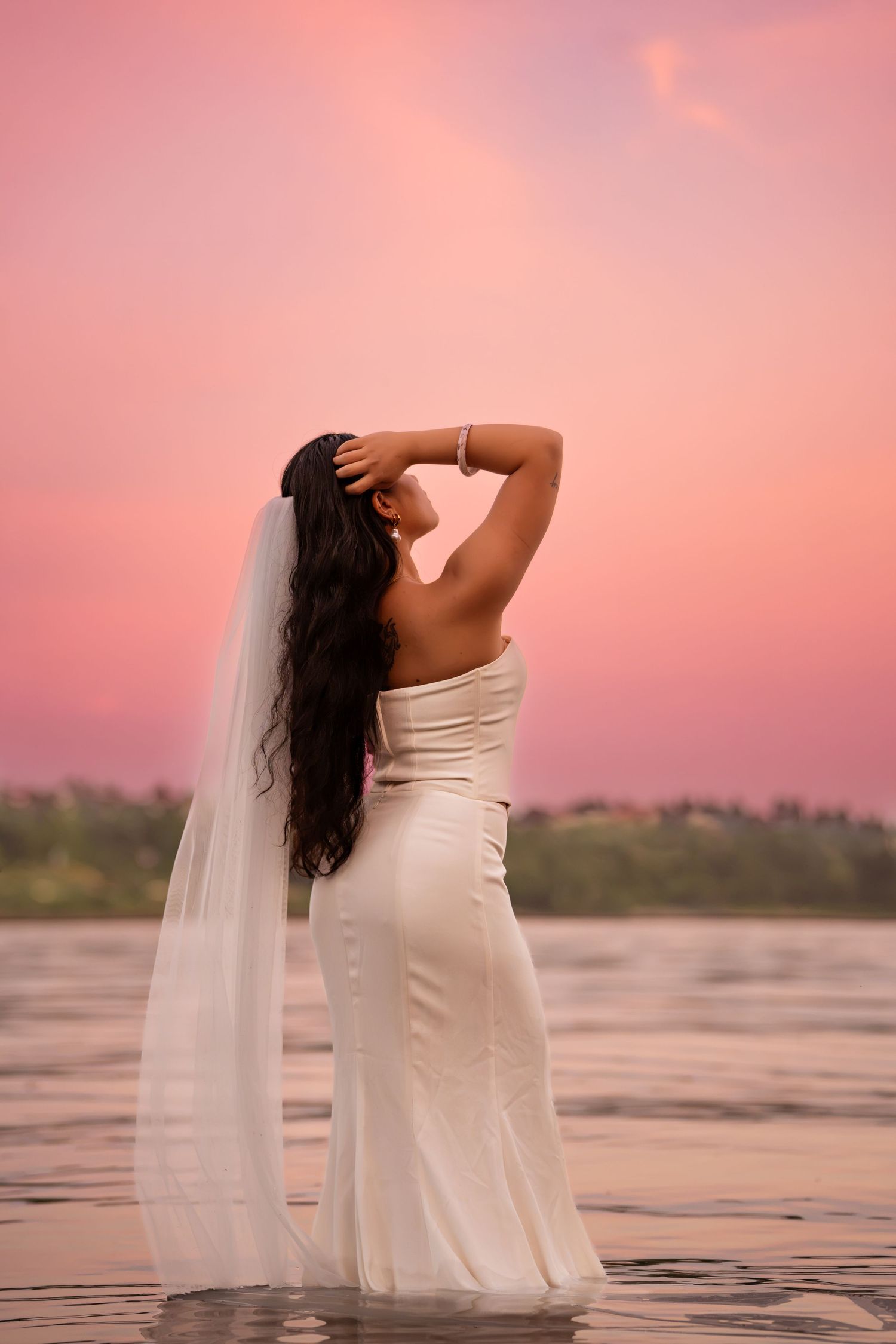
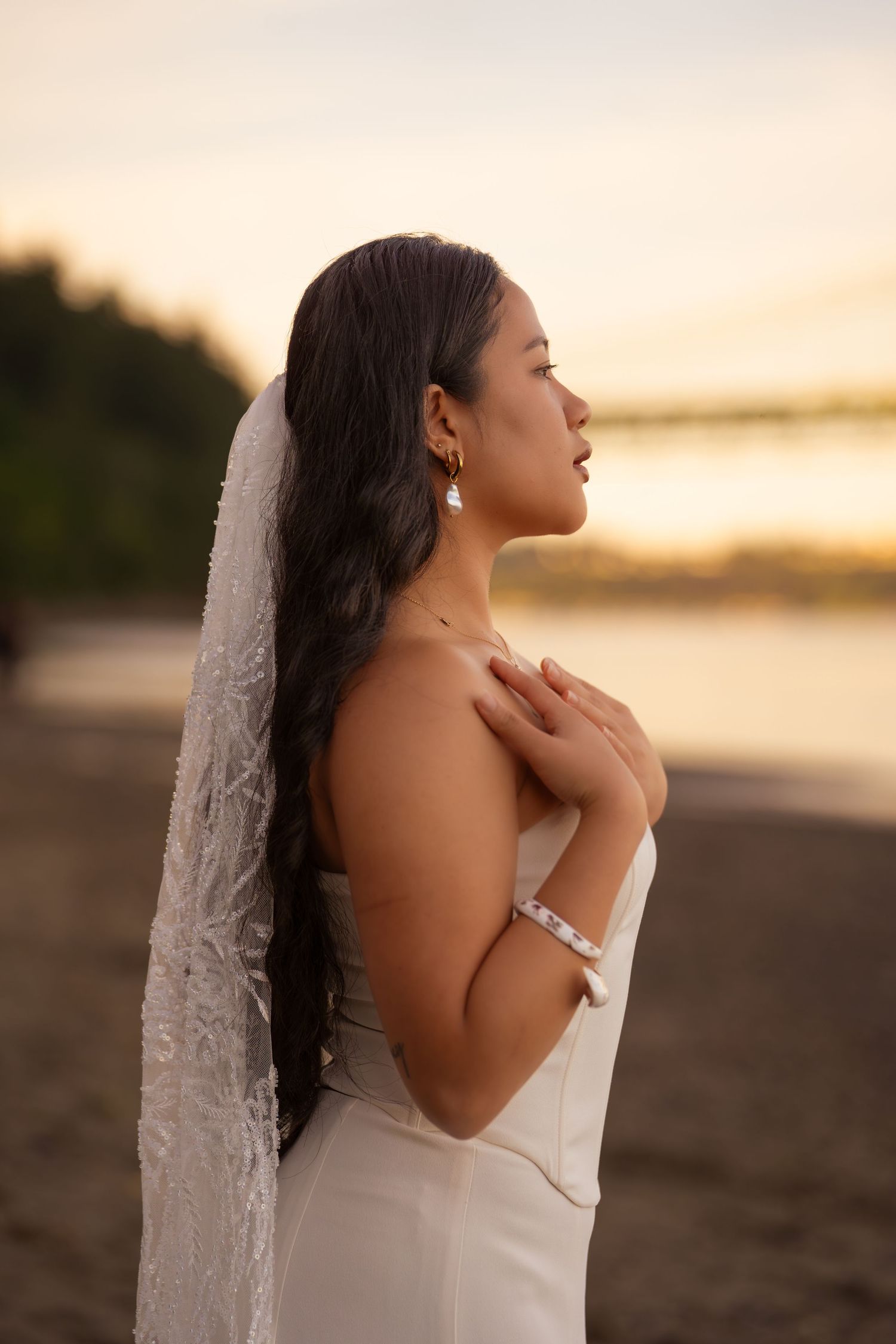
If you're planning bridal portraits, an engagement session, or a full destination wedding along the Lowcountry coast or beyond, our advice is simple. Don't ask us to pick a winner. Ask us to give you both. That is, after all, the entire point of working with a studio built on two perspectives in the first place, whether that means two photographers standing in two places at once, or two entirely different lights telling two entirely different truths about the same golden, glowing, endlessly romantic day.
FAQ
What is the best time for wedding photos, golden hour or blue hour?
Both offer beautiful, professional results, and the better choice depends on the mood you want. Golden hour delivers warm, sun-drenched, joyful imagery and works well for ceremonies and group portraits. Blue hour creates a quieter, more editorial and romantic feel, ideal for intimate bridal or couple portraits.
How long does golden hour actually last?
Typically twenty to thirty minutes, though it varies by season and location, which is why timeline planning with your photographer matters.
Can you photograph both golden hour and blue hour on the same wedding day?
Yes. Many of our South Carolina and destination wedding timelines are built to capture both, giving couples a gallery with two distinct visual moods from a single day.
Do you travel outside South Carolina for bridal portraits and weddings?
We do. While we're proudly building our Lowcountry portfolio here in Charleston and the surrounding coast, we also travel for destination sessions and weddings, wherever the light (and the love story) calls us.
Ready to book your session?
Send us a message and let's get started booking your dream photo experience!